

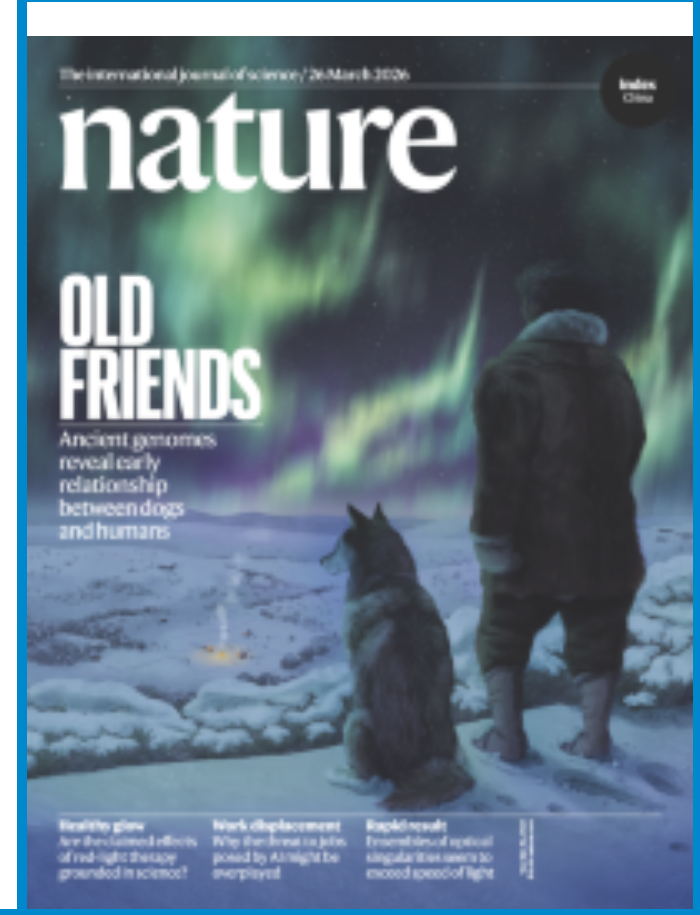
Depuis près de 15000 ans le chien dans la proximité de l’homme
Description
Dogs were widely distributed across western Eurasia during the Palaeolithic
Archaeological evidence suggests that dogs diverged from wolves during the Palaeolithic, more than 15,000 years ago1 The earliest unequivocal genetic evidence, however, is associated with dog remains from Mesolithic archaeological contexts approximately 10,900 years ago. Here we generate both nuclear and mitochondrial genomes from canid remains at Pınarbaşı in Türkiye (15,800 years ago)10 and Gough’s Cave in the UK (14,300 years ago)11, as well as from dogs excavated from two Mesolithic sites in Serbia (Padina between 11,500–7,900 years ago and Vlasac 8,900 years ago)12,13. Our analyses indicate that a genetically homogeneous dog population was already widely distributed across Europe and Anatolia during the Late Upper Palaeolithic (by at least 14,300 years ago). This finding suggests that dogs were exchanged among genetically and culturally distinct western Eurasian Late Palaeolithic human populations, namely the Magdalenian, Epigravettian and Anatolian hunter-gatherers.
Auteurs :
William A. Marsh, Lachie Scarsbrook, Eren Yüncü, Lizzie Hodgson, Audrey T. Lin, Maria De Iorio, Olaf Thalmann, Mark G. Thomas, Mahaut Goor, Anders Bergström, Angela Noseda, Sarieh Amiri, Fereidoun Biglari, Dušan Borić, Katia Bougiouri, Alberto Carmagnini, Maddalena Giannì, Tom Higham, Ophelie Lebrasseur, Anna Linderholm, Marcello A. Mannino, Caroline Middleton, Gökhan Mustafaoğlu, Angela Perri, Laurent A. F. Frantz
Informations complémentaires
| Cote | Volume 651, pages 95-1003 |
|---|---|
| Date de publication | 25 mars 2026 |